Introduction
Follow this guide to replace the screen on a Samsung Galaxy S22.
If your replacement screen comes with a new frame and battery together in one part, follow this guide instead.
Note: Retaining water resistance after the repair will depend on how well you reapply the adhesive, but your device will lose its IP (Ingress Protection) rating.
What you need
-
-
-
Heat an iOpener and apply it to the bottom edge of the back cover for two minutes.
 Ask FixBot
-
-
-
While you wait for the adhesive to soften, note the following:
-
There's adhesive securing the back cover around the perimeter of the frame.
-
-
-
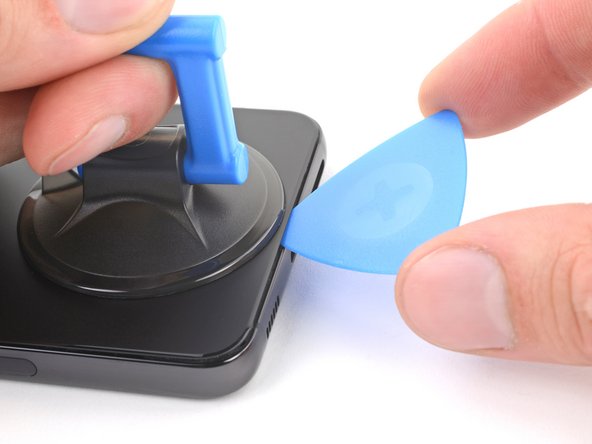
Apply a suction handle to the back cover, as close to the bottom edge as possible.
-
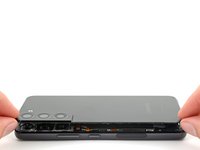
Pull up on the suction handle with strong, steady force to create a gap between the cover and the frame.
-
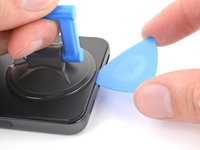
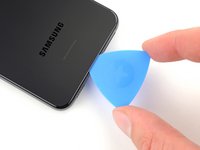
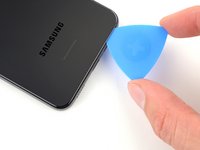
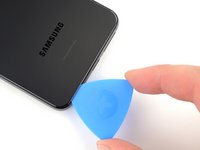
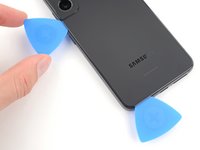
Insert an opening pick into the gap.
-
-
-
Slide the pick back and forth along the bottom edge to slice through the adhesive.
-
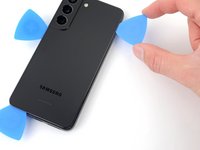
Leave the pick inserted in the bottom left corner to prevent the adhesive from resealing.
-
-
-
Apply a heated iOpener to the left edge of the back cover for two minutes.
-
-
-
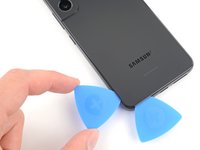
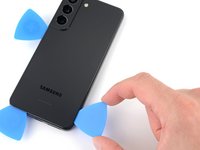
Insert a second opening pick at the bottom left corner.
-
Slide the pick to the bottom of the camera bezel to slice the left adhesive.
-
Leave the pick in to prevent the adhesive from resealing.
-
-
-
Heat an iOpener and apply it to the right edge of the back cover for two minutes.
-
-
-
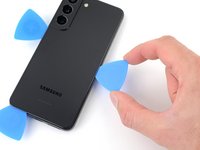
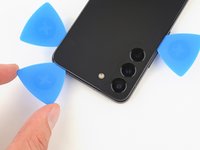
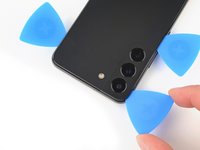
Insert a third opening pick at the bottom right corner.
-
Slide the pick to the top right corner to slice the adhesive.
-
Leave the pick in the top right corner to prevent the adhesive from resealing.
-
-
-
Heat an iOpener and apply it to the top edge of the back cover for two minutes.
-
-
-
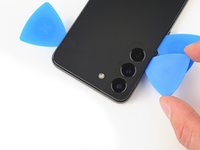
Insert an opening pick in the gap at the top right edge.
-
Slide the pick across the top edge and around the top left corner to slice the remaining adhesive.
-
-
-
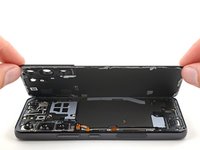
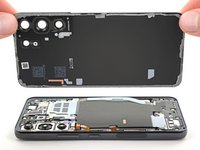
Grab and remove the back cover.
-
This is a good point to power on your phone and test all functions before sealing it up. Be sure to power your phone back down completely before you continue working.
-
Follow this guide to replace the back cover adhesive and install the back cover.
-
-
-
-
-
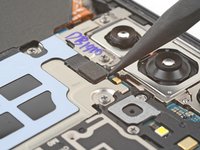
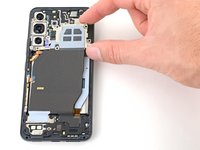
Use the pointed end of a spudger to pry up and disconnect the wireless charging coil from the motherboard.
-
-
-
Use your Phillips screwdriver to remove the six 3.5 mm-long screws securing the wireless charging coil.
-
-
-
Use your Phillips screwdriver to remove the seven 3.5 mm screws securing the loudspeaker.
-
-
-
Insert the pointed end of your spudger between the upper left corner of the loudspeaker and the frame.
-
Pry up to unclip the loudspeaker from the frame.
-
-
-
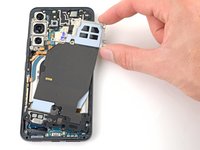
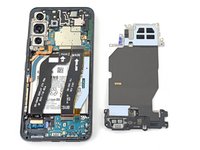
Grab and remove the wireless charging coil and loudspeaker from the frame.
-
-
-
-
-
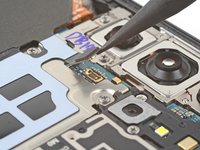
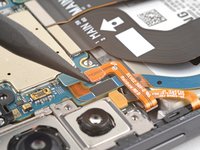
Use the pointed end of your spudger to pry up and disconnect the battery press connector.
-
-
-
-
-
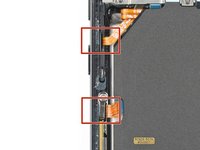
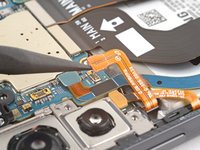
Insert the point of a spudger under the screen cable press connector at the bottom left corner of the phone and pry up to disconnect it.
-
-
-
Repeat this process for the other end of the cable located on the motherboard.
-
-
-
Align the back cover with the frame and press down evenly with your fingers to lightly adhere it to the phone.
-
Flip the phone over so the screen is facing up.
-
-
-
If the screen is badly cracked, lay overlapping strips of packing tape over the glass to protect yourself and make disassembly easier.
-
-
Tool used on this step:iFlex Opening Tool$11.99
-
The gap between the front glass and frame is very small. You'll need a thin, rigid tool like an iFlex to create an initial gap.
-
Don't grip the iFlex or similar metal tools by the edges—they're very sharp.
-
The front glass may shatter and spread shards of glass around your workspace. Consider wearing gloves and safety glasses to protect yourself.
-
-
-
Use a hair dryer or heat gun to heat the bottom edge of the screen until it's slightly too hot to touch.
-
-
-
Apply a suction handle to the center of the screen's bottom edge, as close to the edge as possible.
-
-
-
Lift the suction handle with strong, steady force.
-
Insert an iFlex in the gap between the bottom edge of the screen and the frame.
-
-
-
Replace the iFlex with an opening pick.
-
Slide the opening pick around the top left corner of the phone, separating the glass from the display itself.
-
-
-
Slide the opening pick back and forth across the bottom edge of the phone to separate the adhesive securing the screen to the frame.
-
Leave the opening pick in the bottom‑left corner of the phone to keep the adhesive separated.
-
-
-
Heat the left edge of the screen until it's slightly too hot to touch.
-
-
-
-
Slide the opening pick around the bottom‑left corner and up the left edge of the screen.
-
-
-
Heat the top edge of the screen until it's slightly too hot to touch.
-
-
-
Slide the opening pick around the top‑left corner and across the top edge of the screen to separate the adhesive.
-
-
-
Heat the right edge of the screen until it's slightly too hot to touch.
-
-
-
Slide the opening pick down the right edge of the screen to separate the adhesive.
-
-
-
The screen should be free at this point. If the screen is still adhered anywhere, use heat and an opening pick to separate the adhesive.
-
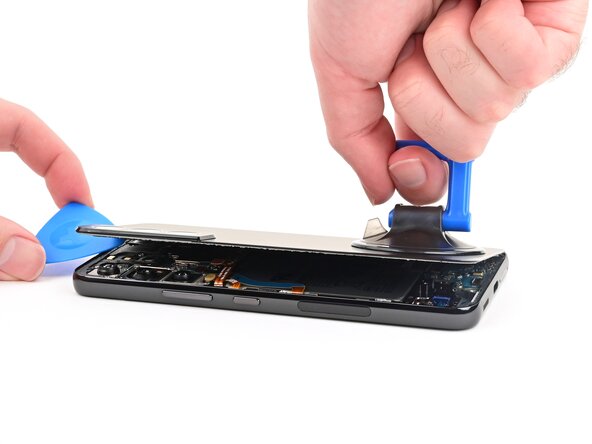
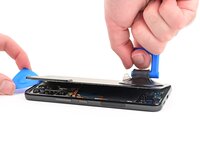
Use the opening pick to lift the screen until you can grab it with your fingers.
-
-
-
Before installing adhesive, all the old adhesive must be completely removed from the frame.
-
The graphite sheet attached to the frame is very fragile. Be careful not to damage it when cleaning the frame.
-
-
-
Use the flat end of a spudger to lift a piece of adhesive residue off the frame, just enough to grab it with a pair of blunt tweezers.
-
-
-
Use blunt tweezers or your fingers to grab a strip of adhesive residue and slowly peel it up off the frame.
-
Repeat this process to remove all strips of adhesive residue left on the frame.
-
-
-
Use blunt tweezers or your fingers to peel off all three clear adhesive film pieces on the frame.
-
-
Tool used on this step:iFixit Adhesive Remover$19.99
-
Apply a few drops of high-concentration (>90%) isopropyl alcohol or adhesive remover to a cotton swab or lint‑free cloth.
-
Clean the areas of the frame where you removed the old adhesive.
-
-
-
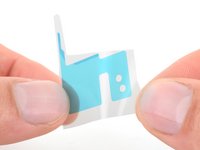
The Galaxy S22 has two strips of adhesive securing the screen to the phone:
-
One large piece that conforms to the top and two long edges of the frame.
-
One small strip that goes along the bottom edge of the frame.
-
-
-
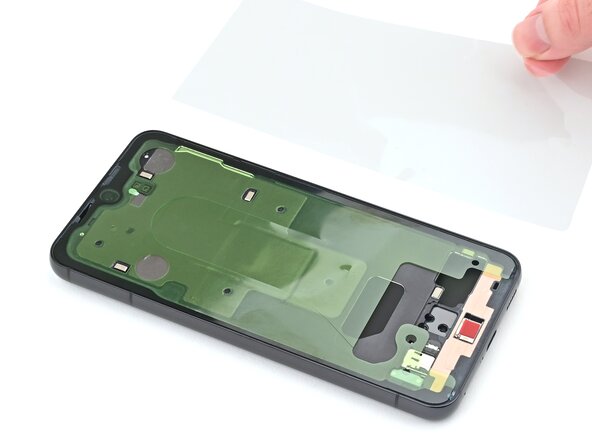
Hold the large adhesive above the frame to find its orientation. Use cutouts in the liner and the contours of the adhesive to help visualize how it will lay in the frame.
-
-
-
Peel up the top half of the larger, clear liner to expose the adhesive. Fold the liner over so only the top half of the adhesive is exposed.
-
-
-
With the larger, clear liner folded towards the bottom of the phone, lay the exposed top edge of the adhesive into the shaped depression at the top of the frame.
-
Slowly lay the rest of the adhesive onto the frame, pressing it into place and peeling away the larger, clear liner as you go.
-
-
-
Peel the clear liner off the top of the small adhesive to expose the green liner. Keep the green liner in place for now.
-
-
-
Align the small adhesive with the bottom edge of the frame. The curvature of the adhesive should match the curvature of the frame.
-
Remove the clear plastic liner from the bottom of the small adhesive. The adhesive is now exposed.
-
-
-
Carefully lower the small adhesive into the frame and stick it into place.
-
-
-
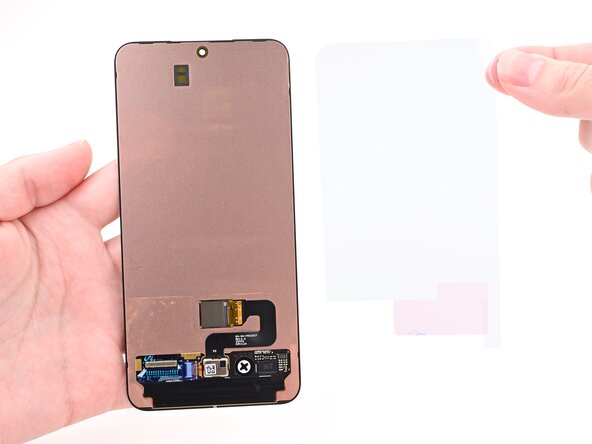
Use your fingers or tweezers to remove all plastic liners from the back of the replacement screen.
-
-
-
Slowly peel up and remove the green liner on the small adhesive, peeling by its protruding tabs.
-
-
-
Align the replacement screen with the frame and set it into place.
-
-
-
Flip the phone over.
-
Use a suction handle to gently lift the back cover from its bottom edge. If it won't lift easily, use an iOpener, hair dryer, or heat gun to heat it until it's hot to the touch.
-
Use an opening pick to gently separate the adhesive securing the back cover.
-
Lift and remove the back cover.
-
-
-
Set the screen cable into place so it's aligned with its sockets on the motherboard and screen (in the bottom left corner of the phone).
-
-
-
Use the flat end of a spudger or your finger to connect the screen press connectors to their respective sockets on the screen and motherboard.
-
-
-
Use the flat end of a spudger or your finger to connect the battery press connector onto its socket on the motherboard.
-
-
-
Insert the loudspeaker at a downward angle into the frame and press it into place.
-
-
-
Use your Phillips screwdriver to install the seven 3.5 mm‑long screws securing the loudspeaker.
-
-
-
Use your Phillips screwdriver to install the six 3.5 mm‑long screws securing the wireless charging coil.
-
-
-
Use the flat end of a spudger or your finger to connect the wireless charging coil press connector to its socket on the motherboard.
-
-
-
-
-
Apply a heated iOpener to the camera bezel on the back cover for two minutes.
-
-
-
Insert an opening pick beneath the metal camera cover at its bottom edge.
-
Slide the pick around the cover's bottom‑left corner to separate it from the adhesive.
-
-
-
Re‑heat the metal camera cover.
-
Slide the opening pick around the entire perimeter of the metal camera cover to separate it from the adhesive.
-
-
-
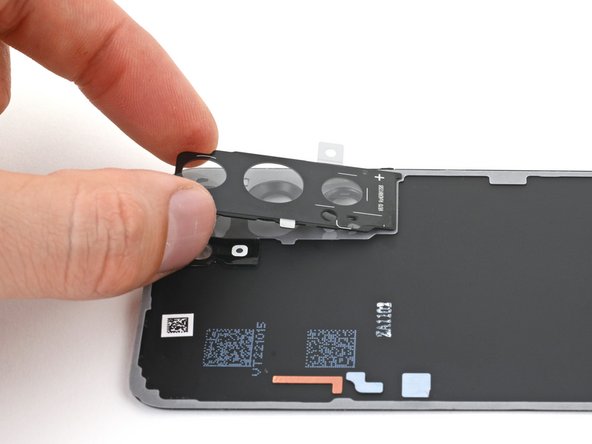
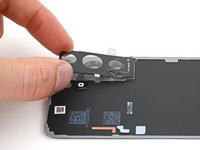
Peel the metal cover off the back cover and remove it.
-
-
-
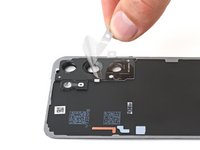
Use blunt nose tweezers or your fingers to lift the thin adhesive strip off the perimeter of the back cover.
-
Heat the adhesive on the camera bezel.
-
-
-
Use your fingers to pull up the remaining adhesive from the camera bezel with slow, steady force.
-
-
-
Use tweezers to remove any adhesive residue from around the microphone cutout.
-
-
Tool used on this step:iFixit Adhesive Remover$19.99
-
Apply a few drops of isopropyl alcohol or adhesive remover to the flat end of a spudger.
-
Use the spudger to scrape off any large chunks of adhesive residue from the camera bezel. Apply more solvent to the spudger to help dissolve the adhesive.
-
-
-
Repeat this process to scrape off any large chunks of adhesive residue from the perimeter of the back glass.
-
-
Tool used on this step:iFixit Adhesive Remover$19.99
-
Apply several drops of isopropyl alcohol or adhesive remover to a microfiber or lint free cloth.
-
Clean the camera bezel and back glass until they're free of adhesive residue.
-
-
-
Repeat the cleaning process to remove any adhesive residue from the frame of the phone.
-
-
-
Lay the back glass and camera bezel on a flat surface.
-
Align the camera bezel with the back glass, making sure the arrow is pointing toward the top of the cover.
-
-
-
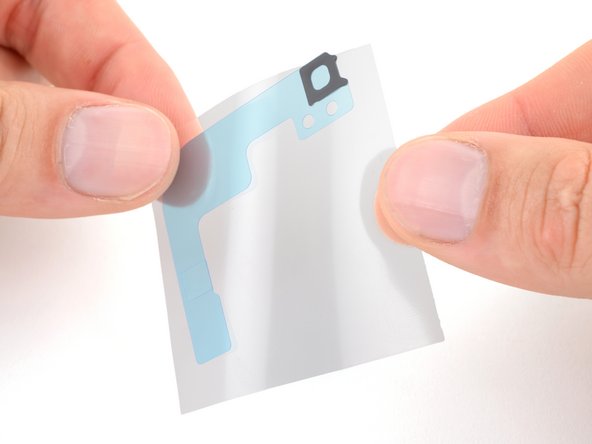
Remove the clear plastic liner from the new back cover adhesive.
-
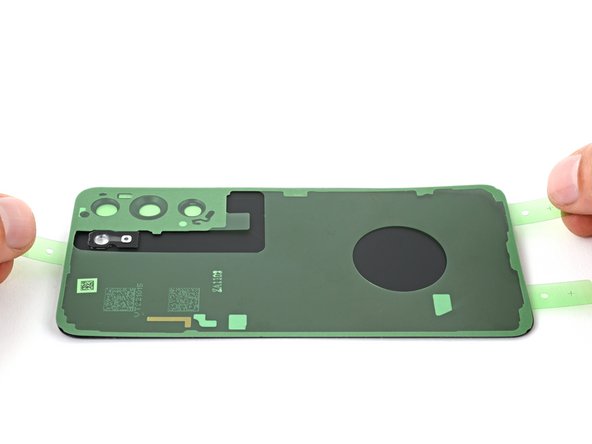
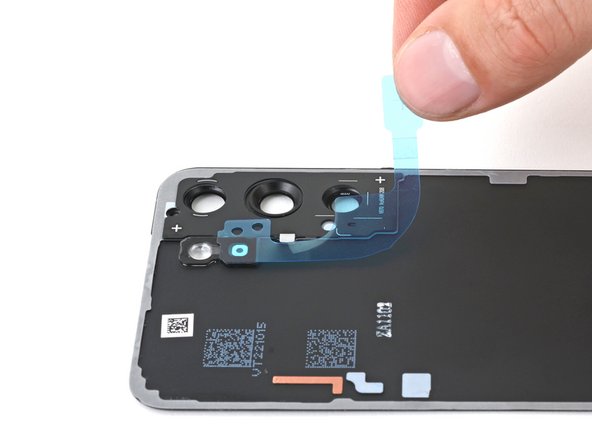
Grab the new adhesive by its pull tabs and align it over the back cover and camera bezel.
-
Place the adhesive on the back cover.
-
-
-
Press firmly along the perimeter of the adhesive to adhere it.
-
Remove the main adhesive liner from the back cover using the pull tabs on the top and bottom edges.
-
If present, remove the secondary adhesive liner from the camera bezel using the pull tab on the bottom of the bezel.
-
-
-
If you're replacing the metal camera cover, remove the main liner from the new cover using the black pull tabs.
-
If you're reusing the cover, ensure the cover is clean and wasn't deformed during removal. If it was, try bending it back into shape. If there's adhesive residue, apply solvent to a cloth and wipe it off.
-
-
-
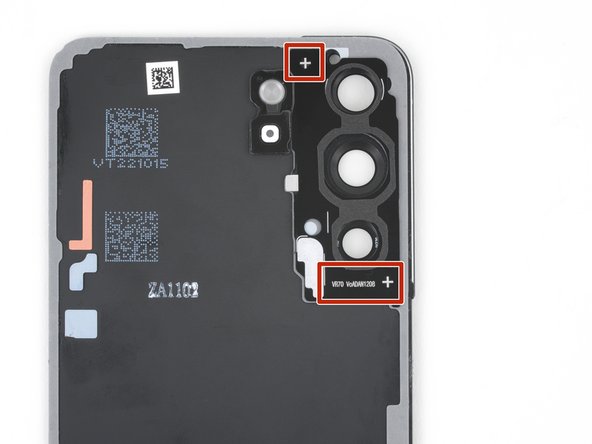
Orient the new metal camera cover so the white text is along the bottom of the camera bezel and the crosses are in the upper left and lower right corners.
-
Place the cover onto the camera bezel and apply pressure to adhere it.
-
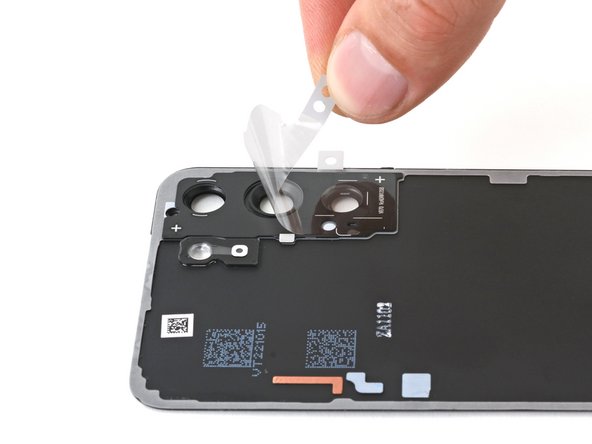
If you're installing a new cover, remove the secondary liner using the white pull tabs.
-
-
Tool used on this step:Tesa 61395 Tape$2.95
-
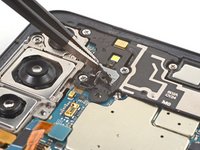
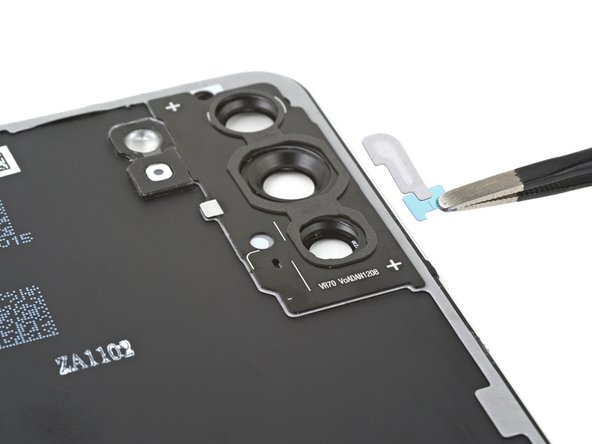
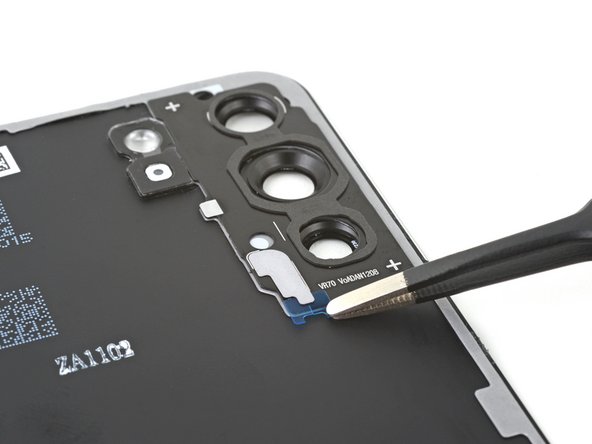
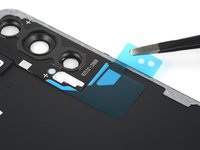
On the motherboard cover, remove the old adhesive from the microphone hole under the flash unit.
-
If you have replacement microphone adhesive:
-
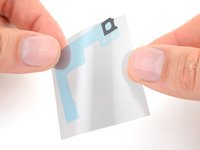
Remove the clear liner from the large L‑shaped adhesive piece.
-
Place the square piece of adhesive over the back cover's microphone cutout under the flash unit, with the blue liner tab facing right.
-
Remove the blue liner.
-
If you don't have replacement microphone adhesive, use 1 mm strips of thin, double-sided tape instead. Apply the strips around the perimeter of the white microphone sticker on the back cover.
-
-
-
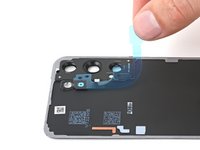
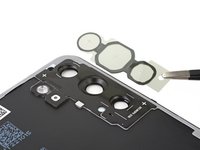
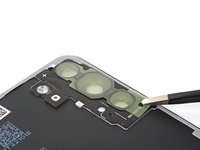
Remove the clear liner from the camera foam adhesive.
-
Orient the adhesive over the camera cutouts with the circular section toward the top.
-
Place the adhesive onto the metal cover, making sure to use the markings around the camera cutouts to align it.
-
Remove the green liner from the adhesive.
-
-
-
Remove the clear liner from the air vent adhesive.
-
Place the adhesive onto the metal cover with the fuzzy side facing upward and the blue tab toward the bottom of the cover.
-
Use the markings on the cover to align the adhesive.
-
Remove the blue tab from under the adhesive.
-
-
-
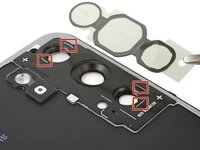
Remove the clear liner from the large two-piece adhesive sheet.
-
Align the adhesive over the notches in the bottom left of the metal cover.
-
Place the adhesive and apply pressure to adhere it.
-
Remove the blue liner.
-
-
-
Align the back cover with the frame and set it into place.
-
Press on the back cover to help the adhesive bond.
-
-
-
To help the adhesive bond, apply heat to all four edges of the back cover using an iOpener, hair dryer, or heat gun until it's hot to the touch.
-
-
-
Place the phone screen-side-down on a soft, flat surface.
-
Apply blue painter's tape to the edges to protect its finish.
-
-
-
Place evenly spaced layers of coins or similarly thick objects on the tape along the edges of the back cover.
-
Stack them to a consistent height taller than the camera bump.
-
-
-
Stack multiple books or other heavy objects on the coins.
-
Leave the objects in place for at least thirty minutes. The lighter the objects, the longer they should be left. Ideally, leave them stacked overnight.
-
-









































Take your e-waste to an R2 or e-Stewards certified recycler.
Repair didn’t go as planned? Check out our Answers community for troubleshooting help.
Cancel: I did not complete this guide.
One other person completed this guide.

