
Free Shipping on Domestic Orders $75+

2.2 GHz (Turbo Boost up to 3.4 GHz) or 2.5 GHz (Turbo Boost up to 3.7 GHz) quad-core Intel Core i7 processor with 6MB shared L3 cache.

Flex I/O Board Data Cable removal clarification

Hi everyone,

I’m working on a MacBook Pro 15" Retina Mid 2014 (MacBookPro11,3) that has been freezing and shutting down repeatedly. The crashes happen more often when the laptop is moved, if it's on a desk it works.

After analyzing multiple kernel panic reports (panic: initproc exited, with repeated “Root disk errors: Could not recover SATA HDD after 5 attempts”), ChatGPT told me it strongly points to a failing Flex I/O Board Data Cable (the belt-like ribbon cable, not the rigid plastic I/O cable), as per below image:

Image

I’m trying to replace this cable, but I’m having trouble finding a clear step-by-step guide or video that shows how to remove and reinstall it without removing the logic board. I looked everywhere and I couldn't find it.

From what I understand so far:

  • The cable has two different connector styles:
    • One end (I/O board side) is a standard ZIF connector with a metal retaining flap, which I can access and open normally.
    • The other end (logic board side) is partially hidden under the logic board and appears to also have a ZIF-style connector, but the flap is not accessible unless the logic board is removed.
  • Based on research and advice I received from ChatGPT, the intended removal method does not require opening the hidden flap:
    • After disconnecting the accessible I/O board end, the cable should be removed by sliding it laterally (parallel to the logic board) from the I/O board side toward the batteries / a nearby screw, by only a few millimeters.
    • Sliding it this way should allow the logic-board end of the cable to disengage from the ZIF socket even with the flap still closed, since the flap prevents vertical lift but not horizontal withdrawal.
Image
  • This would explain why ChatGPT told me this operation doesn't require logic board removal for Flex I/O cable replacement, even though logic board removal guide I found on this website mention flipping the retaining flap (step 34).

Before proceeding, I’d like to double check:

  1. Is this sliding method correct for removing the Flex I/O Board Data Cable on a Late 2013 / Mid-2014 15" MBP without removing the logic board?
  2. Is it expected that the cable feels tight at first and only slides 2–3 mm before coming free?
  3. Are there any photos, videos, or firsthand confirmations showing this exact step?

I want to avoid forcing anything or damaging the logic board socket, so any clarification from someone who has done this repair would be greatly appreciated.

Thanks in advance!

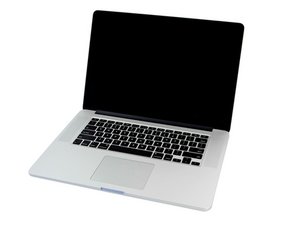
Replace an I/O Board Data Cable compatible with the Late 2013 to Mid 2014 MacBook Pro 15" Retina laptop. Fix the connection between the I/O Board and the Logic Board. Image

Product

MacBook Pro 15" Retina (Late 2013-Mid 2014) I/O Board Data Cable

$9.99

Answered! View the answer I have this problem too

Is this a good question?

Score 0
Add a comment

2 Answers

Chosen Solution

Hi Alex!

TLDR: The "sliding" method should work, but you may have better luck removing the whole board and putting it back.

Replacing the cable is not incredibly difficult. The sliding method works in theory, but the cable can sometimes get stuck. Therefore, don't worry if you do need to remove the motherboard.

MacBook Pro 15" Retina Display Mid 2014 Logic Board Replacement

Also, here is a video that may help: https://www.youtube.com/watch?v=VZku4jRb...

Be sure to ground yourself from ESD and use non-conductive tools for this. Also, unplug the battery from the motherboard before attempting any repairs.

Good luck, and let me know if you have any questions!

Was this answer helpful?

Score 1

7 Comments:

Thank you for the quick answer, Teardown! I'll try again to slide the cable, I wanted to be sure it was the right method because, in my head (I have 0 knowledge in this field), it's difficult to understand how the metal retaining flap is not holding the cable into place. And at the same time I'm also scared that maybe I could damage it even more because it's in a pretty bad spot, to be honest it's difficult to actually push it in a nice/proper way.

Removing the whole logic board would be the last option, and I wanted to avoid this, if possible, but we'll see.

But thank you for confirming that I may actually be able to slide it, it's what I was looking for :)

by

Happy to help! One more thing I forgot to mention --- if the cable is not budgeing don't force it. The metal connectors can be fragile and easy to bend... If you feel resistance, which can happen esoecially as these types of connectors age, just remove the motherboard.

by

@alex333 - After lifting the wire bale lock, the cable slides out of its connectors slot and you need to slide it out evenly. It's just a snug fit not needing much to pull or push. But lifting it up away from the logic board plane will damage either or both! As the cable tang and the connector slot are easily damaged.

by

Thank you for the additional info, guys, I appreciate it!

One last question: if I just remove the logic board (no replacement), I don't need any thermal paste, right? Just regular tools and everything I remove can be easily put back in place, is that correct?

by

In general, you do not need thermal paste. However, if the paste looks hard/dry, I'd suggest replacing it while you are at it. It's really quite easy and will increase the performance of your computer significantly. Here is a link that explains how to repaste a laptop: How to Repaste a Laptop

by

Show 2 more comments

Add a comment

This issue is very common on MacBook Pro 2012–2015 models and is usually caused by a failing SATA flex (hard drive) cable. The cable degrades over time and loses signal when the laptop is moved, triggering disk errors and kernel panics. The best solution is to replace the flex I/O board data cable with a high-quality replacement, preferably an OEM or well-reviewed part. After replacement, reset SMC and NVRAM. If the problem persists, test the drive itself using Disk Utility or try an external boot to rule out SSD/HDD failure.

Was this answer helpful?

Score -1

1 Comment:

This is a Retina model not the older Uniboby.

by

Add a comment

Add your answer

Alex will be eternally grateful.
View Statistics:

Past 24 Hours: 0

Past 7 Days: 7

Past 30 Days: 42

All Time: 203