Introduction
Use this guide to replace a broken, cracked, or non-responsive screen on your iPhone 15 Pro.
You'll need replacement screen adhesive to complete this repair.
Note: Due to Apple's parts pairing restrictions, on iOS 17.6 and earlier, True Tone and auto brightness are disabled after a screen replacement, even when using an original Apple screen. On newer iOS versions, these features may be restored automatically. If you're using an original Apple screen, you can use Repair Assistant to calibrate it with your iPhone.
What you need
-
-
-
Unplug all cables from your phone.
-
Hold the power and either volume button and slide to power off your phone.
 Ask FixBot
-
-
-
If your screen or back glass is cracked, lay overlapping strips of packing tape over the glass to protect yourself and make disassembly easier.
-
-
-
-
-
Measure 3 mm from the tip and mark the opening pick with a permanent marker.
-
-
-
-
-
Use a P2 pentalobe screwdriver to remove the two 7 mm‑long screws on either side of the charging port.
-
-
-
-
-
During the next two steps, make sure you're inserting your pick in the correct location:
-
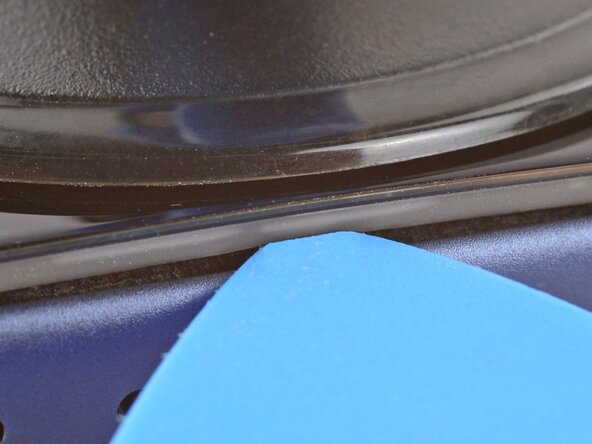
There's a plastic bezel on the underside of the screen that sits on the frame. Insert your pick here, making sure it's completely under the bezel.
-
There's a seam between the plastic bezel and the display panel. Don't insert your pick here or you'll separate the two, complicating the repair.
-
-
-
-
-
Use a hair dryer or heat gun to heat the bottom edge of the screen until it's hot to the touch.
-
-
-
Apply a suction handle to the bottom edge of the screen.
-
Pull up on the handle with a strong, steady force to create a gap between the screen and the frame.
-
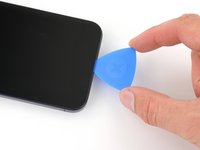
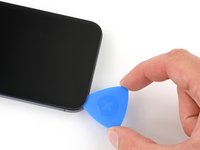
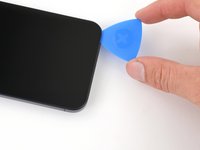
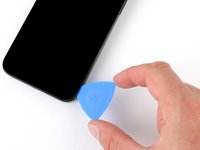
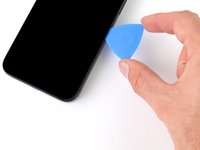
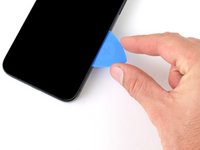
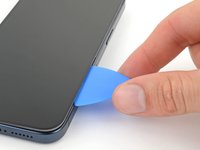
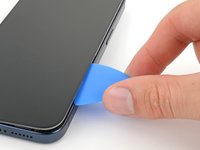
Insert the tip of an opening pick into the gap.
-
-
-
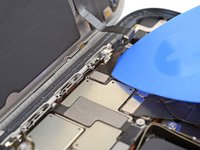
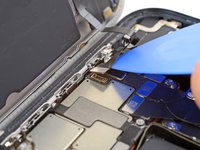
There are two delicate cables connecting the screen to the phone: one just above the action button, and the other near the middle of the left edge.
-
There are multiple spring contacts around the perimeter of the phone. Be extra careful not to insert your pick deeper than suggested in these locations to avoid bending the contacts.
-
-
-
Slide your pick back and forth along the bottom edge to separate the adhesive.
-
Leave your pick inserted in the bottom right corner to prevent the adhesive from re-sealing.
-
-
-
Heat the right edge of the screen until it's hot to the touch.
-
-
-
Slide your pick around the bottom right corner of the screen and toward the power button until you feel a hard stop at a clip securing the screen.
-
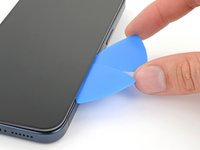
Rotate your pick so the flat edge is under the screen.
-
-
-
Twist the pick to increase the gap between the screen and the frame until the right clip releases.
-
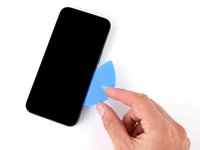
Insert a second opening pick to the right of the first pick.
-
-
-
Slide the first pick back to the bottom right corner of the screen.
-
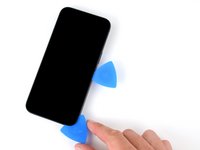
Slide the second pick to the top right corner of the screen to separate the adhesive.
-
Leave these picks inserted to prevent the adhesive from resealing.
-
-
-
Heat the top edge of the screen until it's hot to the touch.
-
-
-
Slide your pick around the top right corner and along the top edge to release the two clips and adhesive securing it.
-
-
-
Heat the left edge of the screen until it's hot to the touch.
-
-
-
Rotate your pick around the top left corner of the screen.
-
Slide your pick to the bottom left corner of the screen to separate the adhesive.
-
-
-
-
-
Place a small box or stack of books to the left of your phone so you can prop up the screen while disconnecting its cables.
-
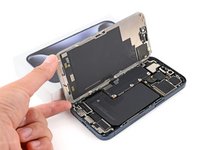
Swing up the right edge of the screen like the front cover of a book.
-
Prop up the screen so you can access its cables without straining them.
-
-
-
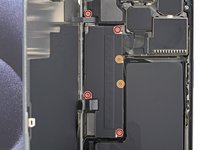
Use a Y000 screwdriver to remove the six screws securing the logic board cover:
-
Four 1.6 mm‑long screws
-
Two 1.3 mm‑long screws
-
-
-
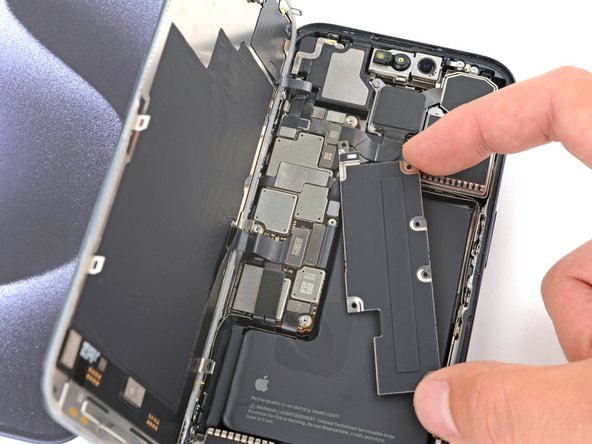
Rotate the bottom of the logic board cover counterclockwise and slide the top left corner out from under the ambient light sensor cable to remove it.
-
-
-
-
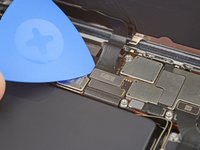
Use the tip of an opening pick to pry up and disconnect the battery press connector from the bottom right corner of the logic board.
-
-
-
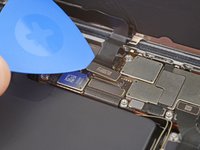
Use the tip of an opening pick to pry up and disconnect the screen cable from the center of the logic board.
-
-
-
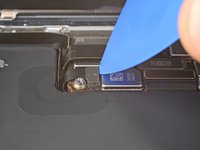
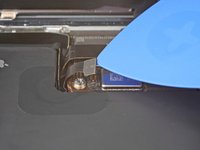
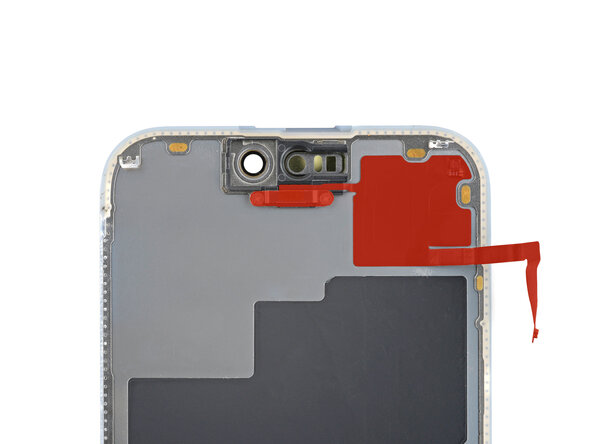
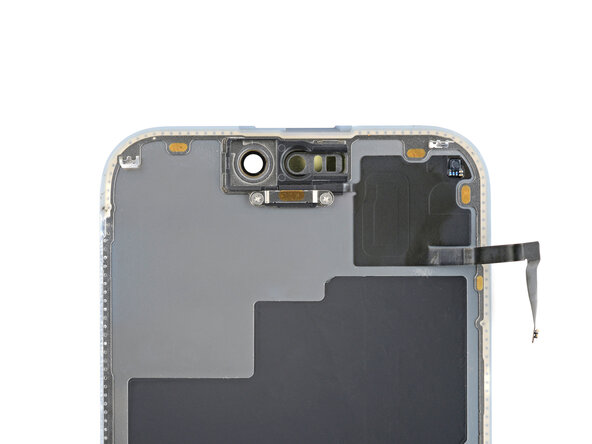
Gently slide the tip of an opening pick under the ambient light sensor cable near the top left corner of the logic board.
-
Lift the cable to disconnect it.
-
-
-
-
-
Check if your new screen comes with an ambient light sensor installed.
-
-
-
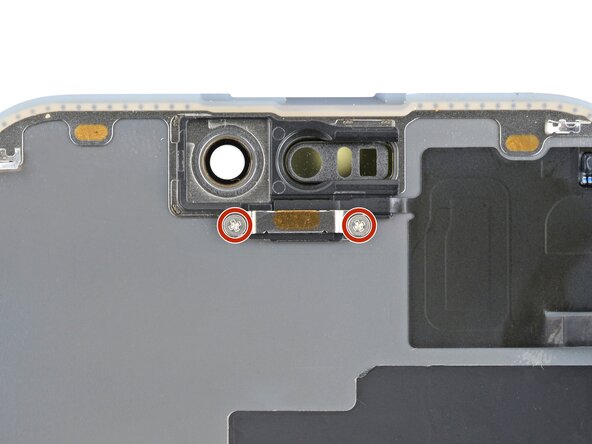
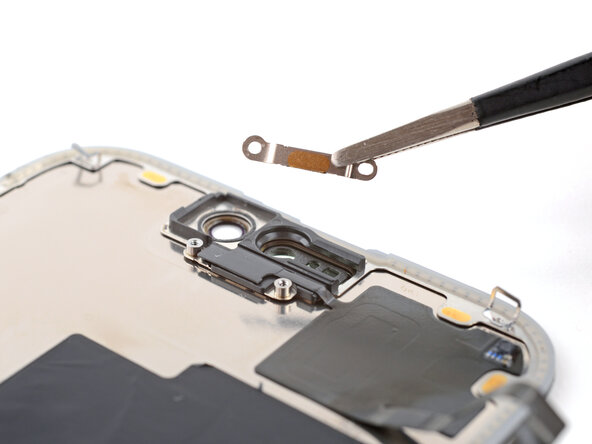
Use a Phillips #000 driver to remove the two 1.4 mm-long screws securing the ambient light sensor cover.
-
-
-
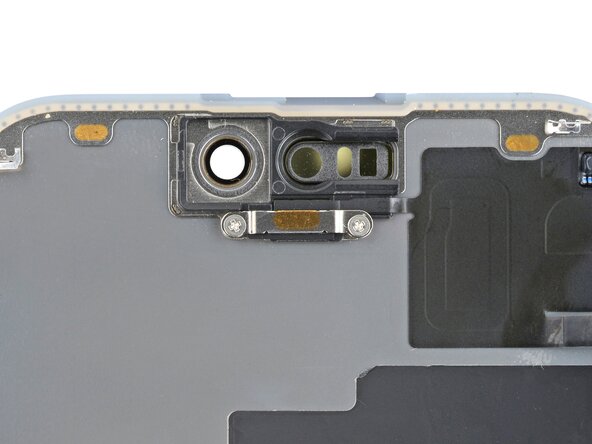
Remove the ambient light sensor cover.
-
-
-
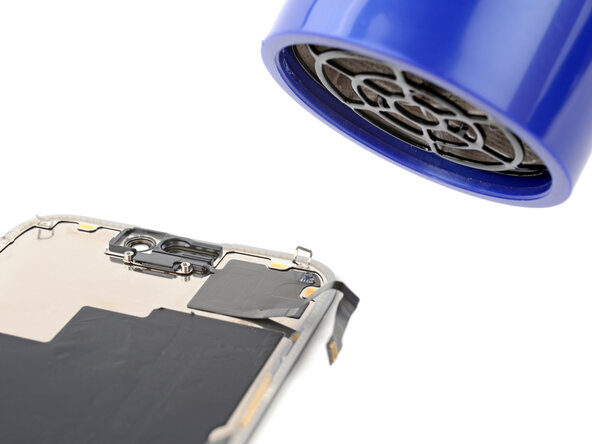
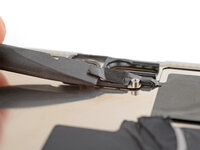
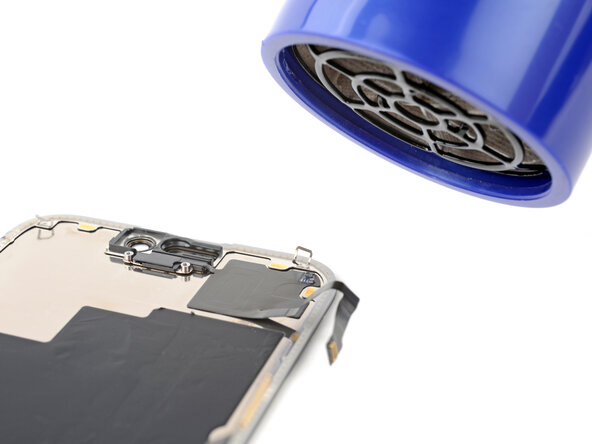
Use a hair dryer or heat gun to heat the ambient light sensor until it's warm to the touch.
-
-
-
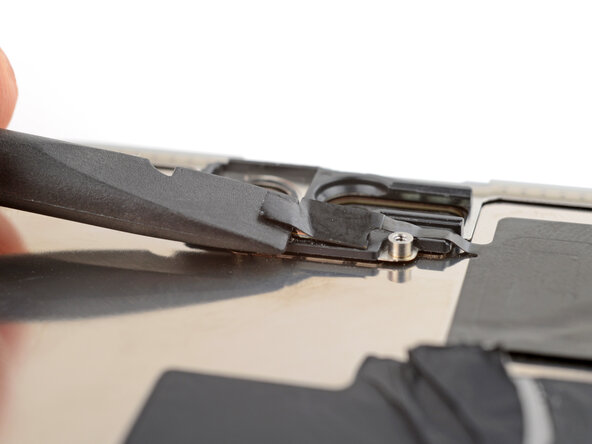
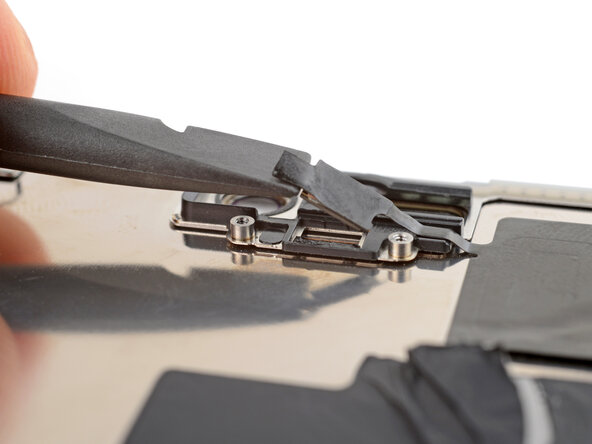
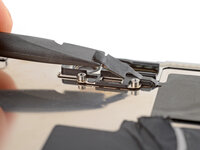
Use the flat end of a spudger to gently lift the ambient light sensor out of its enclosure.
-
-
-
Apply more heat until the entire glued down part of the sensor is warm to the touch.
-
-
-
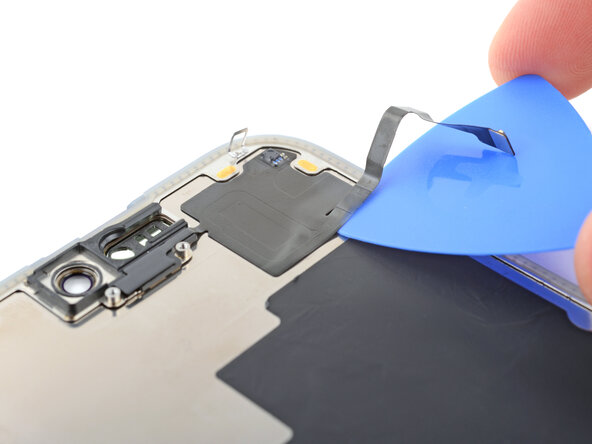
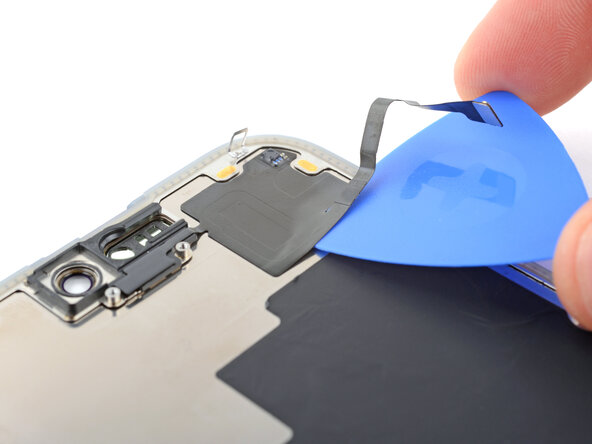
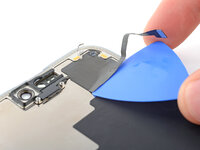
Insert the tip of an opening pick under the bottom right corner of the sensor.
-
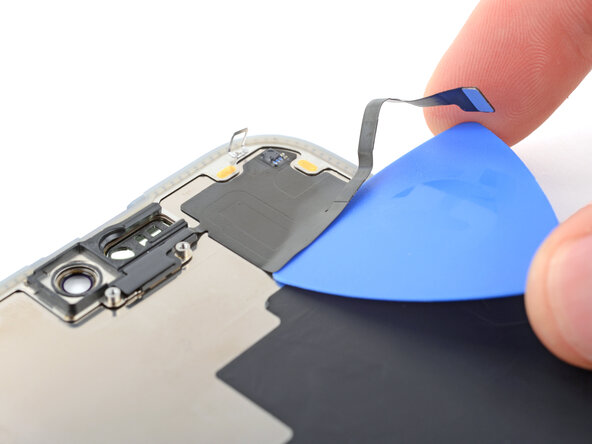
Slide the pick under the sensor and lift until you can grip it with your fingers.
-
-
-
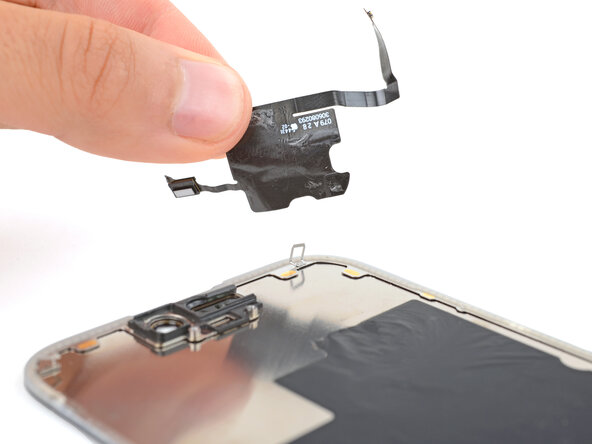
Use your fingers to slowly peel up and remove the sensor.
-
-
-
-
-
Congratulations on completing disassembly! The remaining steps show how to reassemble the iPhone.
-
-
-
-
Tool used on this step:Tesa 61395 Tape$2.95
-
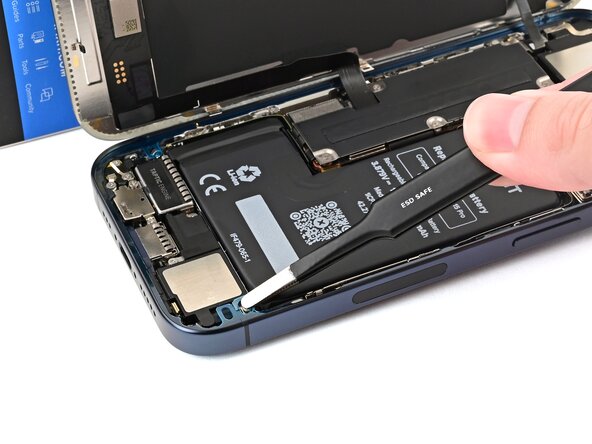
Use tweezers to reposition any adhesive that may have covered the ambient light sensor during removal. The adhesive should form a border around the raised white rectangle.
-
If the adhesive was damaged or stayed with the old screen, replace it with a 1 mm‑wide strip of thin, double-sided tape along its bottom border.
-
-
-
Align the ambient light sensor with its recess in the back of the screen.
-
Use a spudger or your finger to place the ambient light sensor into its recess.
-
-
Tool used on this step:Tesa 61395 Tape$2.95
-
Use a hair dryer or heat gun to soften the adhesive under the ambient light sensor and its cable. It only needs to be warm—not hot.
-
Use your finger to press down the ambient light sensor cable.
-
-
-
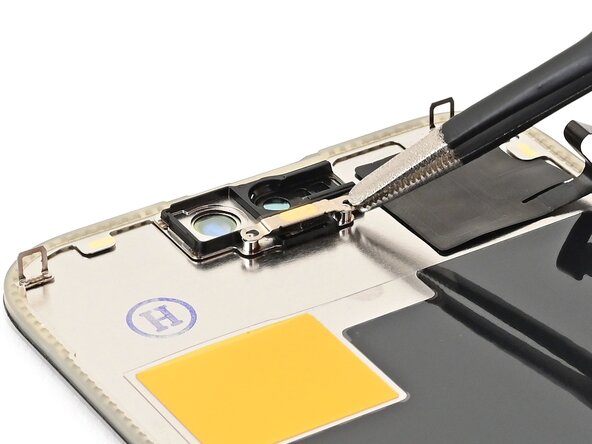
Use tweezers or your fingers to place the ambient light sensor bracket, foam side down, aligned with its screw holes.
-
Use a Phillips screwdriver to install the two 1.4 mm‑long screws securing the ambient light sensor bracket.
-
-
-
-
-
Use a spudger to push the screen adhesive up until you can grab it with a pair of tweezers.
-
Use a pair of tweezers, or your fingers, to remove the adhesive around the entire perimeter of the iPhone.
-
-
-
Apply a few drops of high-concentration (greater than 90%) isopropyl alcohol to a cotton swab or lint-free cloth.
-
Wipe along the perimeter of the frame to clean the adhesive residue.
-
Wait a few minutes before proceeding to make sure any excess alcohol has evaporated.
-
-
-
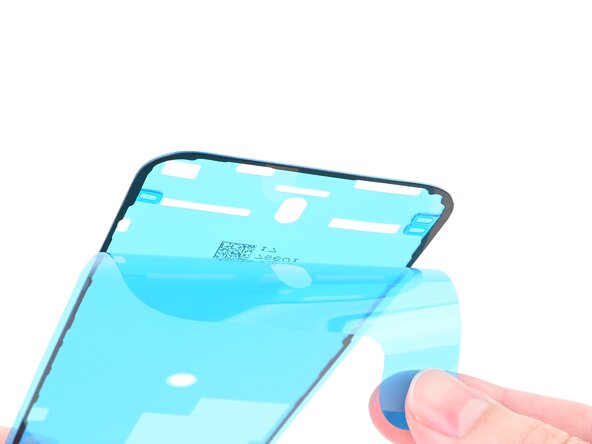
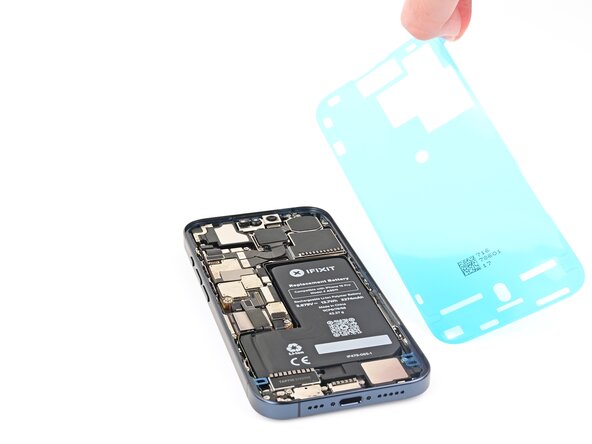
Lay the adhesive next to the phone and use features like cutouts for spring contacts and the front‑facing camera to orient it correctly.
-
-
-
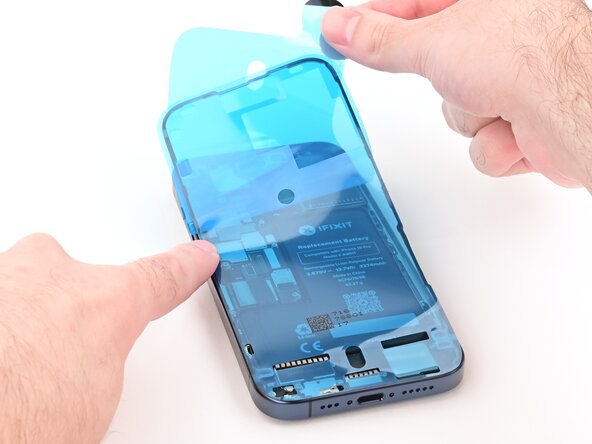
Use the pull tab to begin peeling the back liner off of the adhesive starting from the bottom, but don't remove it all the way.
-
While holding the back liner out of the way, carefully align the exposed edge of the adhesive to the bottom edge of the iPhone's frame.
-
When the adhesive is aligned, set it down along the bottom edge.
-
-
-
Continue peeling the back liner off of the adhesive while setting the adhesive into place along the edges of the iPhone's frame.
-
-
-
Use the flat end of a spudger to press the adhesive into place all around the iPhone.
-
-
-
Lift the pull tab in the top‑right corner of the frame to peel off the top liner and remove it.
-
-
-
Once the top liner is removed, there should be three narrow liners on top of the adhesive with pull tabs near the bottom edge.
-
-
-
Prop the screen up along the left edge of the iPhone frame, using a box or similar sturdy object to support the screen.
-
-
-
Use your finger or the flat end of a spudger to connect the screen and ambient light sensor press connectors.
-
-
-
Use your finger or the flat end of a spudger to connect the battery press connector.
-
-
-
Slide the top left corner of the logic board cover under the ambient light sensor cable and set it into place, aligned with its screw holes.
-
-
-
Use a Y000 screwdriver to install the six screws securing the logic board cover:
-
Four 1.6 mm‑long screws
-
Two 1.3 mm‑long screws
-
-
-
Use tweezers to remove the two narrow liners covering the adhesive along the right, top, and bottom edges of the frame.
-
-
-
Without letting the screen touch the adhesive, hold the screen over the phone so you can access the final liner along the left edge of the frame.
-
Use a pair of tweezers or your fingers to remove the final liner along the left edge of the frame.
-
-
-
Firmly press along the edges of the screen to engage the clips and compress the adhesive.
-
-
-
Use a P2 pentalobe screwdriver to install the two 7 mm‑long screws on either side of the charging port.
-
-
-
To help the adhesive bond, apply heat to the edges of the screen using a hair dryer or heat gun until it's hot to the touch.
-
If you have screen vise clamps, use them to strengthen the bond of the new adhesive. If not, keep reading for more ways to secure the screen.
-
-
-
-
-
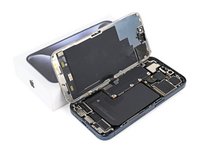
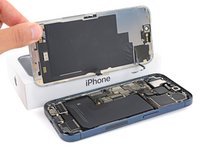
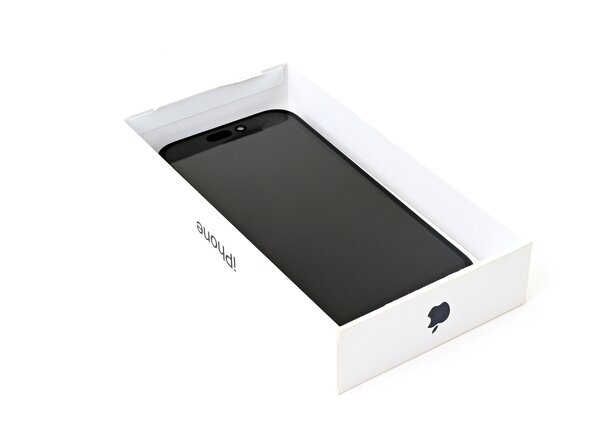
If you have the iPhone's original box, take the lid and place it on a flat surface.
-
If you don't have the original box, skip this step for an alternate method.
-
Place the iPhone screen-side-up in the lid of the box with the camera bump in its recess.
-
Find something close to the size of the iPhone, but taller than the sides of the box. Stack it on top of the iPhone, followed by a few heavy objects.
-
Leave the objects in place for at least thirty minutes, ideally overnight.
-
-
-
Place the iPhone screen-side-down on a soft, flat surface.
-
Apply tape to the back glass to protect its finish.
-
Place three layers of coins or similarly thick objects on the tape along the edges of the back glass.
-
Evenly distribute the coins and make sure they are at least as thick as the camera bump.
-
-
-
Stack multiple books or other heavy objects on your iPhone.
-
Leave the objects in place for at least thirty minutes, ideally overnight.
-
-










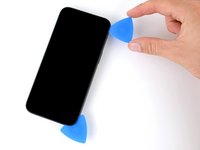


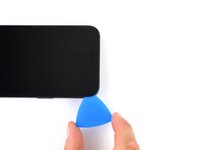
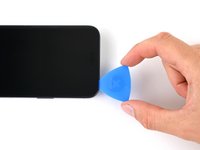
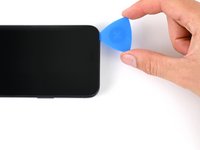


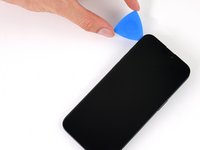
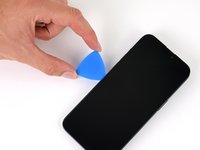
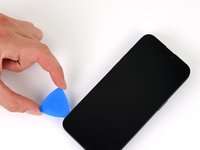


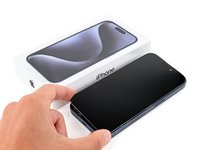




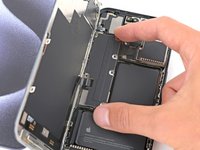
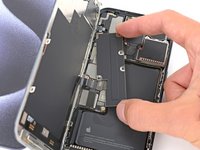
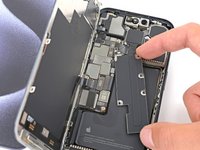


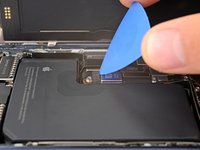






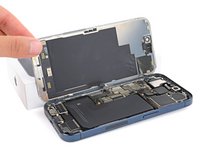

















Congratulations on completing the repair!
After your repair, depending on the replacement part, you may be able to pair it using Apple's Repair Assistant, available as of iOS 18. Update your device, navigate to Settings → General →About → Parts & Service History, tap Restart & Finish Repair, and follow the onscreen prompts.
Take your e-waste to an R2 or e-Stewards certified recycler.
Repair didn’t go as planned? Try some basic troubleshooting, or ask our Answers community for help.
Cancel: I did not complete this guide.
45 other people completed this guide.


13 Guide Comments
Very helpful
This adhesive is way more annoying than it has any logical reason to be.
